
Unser Team
Professor*innen


Wissenschaftliche Mitarbeiter*innen
-
Martin Braun
Koordinator für digitale Forschungsinfrastrukturen
E: martin.braun(at)univie.ac.at
T: +43-1-4277-43520
-
Tashi Bhutia
Univ.-Ass. PraeDoc
E: tashi.bhutia@univie.ac.at
T: +43-1-4277-43572
-
Alaka Chudal
Senior Lecturer
E: alaka.chudal@univie.ac.at
T: +43-1-4277-43514
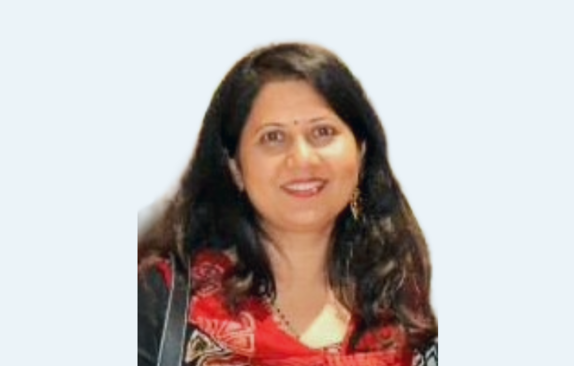 Chudal
 -
Drölma Chöekyi Jusal
Univ.-Ass. PostDoc
E: zemaqixi.zemaqixi@univie.ac.at
T: +43-1-4277-43553
 Drölma Chöekyi Jusal
 -
Luisa Masznitz
Univ.-Ass. PraeDoc
E: luisa.masznitz@univie.ac.at
T: +43-1-4277-43517
 Masznitz
 -
Pongsit Pangsrivongse
Univ.-Ass. PostDoc
E: pongsit.pangsrivongse@univie.ac.at
T: +43-1-4277-43516
-
Monika Sailer
Univ.-Ass. PraeDoc
E: monika.sailer@univie.ac.at
T: +43-1-4277-43560
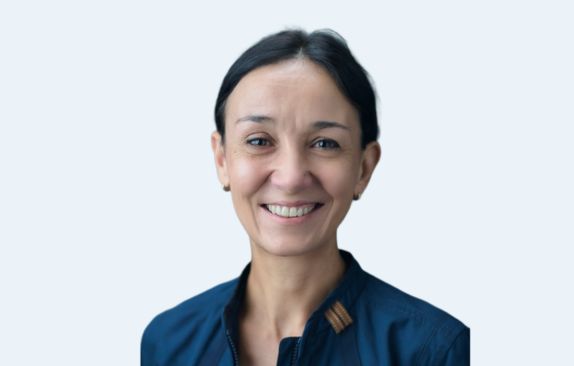 Sailer
 -
Anna Scarabel
Univ.-Ass. PostDoc
E: anna.scarabel@univie.ac.at
T: +43-1-4277-43515
 Scarabel
 -
Julian Schott
Univ.-Ass. PostDoc
E: julian.schott@univie.ac.at
T: +43-1-4277-43565
 Schott
 -
Markus Viehbeck
Senior Scientist
E: markus.viehbeck@univie.ac.at
T: +43-1-4277-43566
 Viehbeck
 -
Verena Widorn
Himalaya Archive Vienna
E: verena.widorn@univie.ac.at
T: +43-1-4277-43570
 Widorn
 -
Patrick Zeitlhuber
Univ.-Ass. PraeDoc
E: patrick.zeitlhuber@univie.ac.at
T: +43-1-4277-43519
 Zeitlhuber
Projektmitarbeiter*innen
-
Sahishnu Bhattacharyya
E: sahon.bhattacharyya@univie.ac.at
T: +43-1-4277-43575
 Bhattacharyya
 -
Filippo Brambilla
E: filippo.brambilla@univie.ac.at
T: +43-1-4277-43557
 Brambilla
 -
Lucy May Constantini
E: lucy.may.constantini@univie.ac.at
T: +43-1-4277-43576
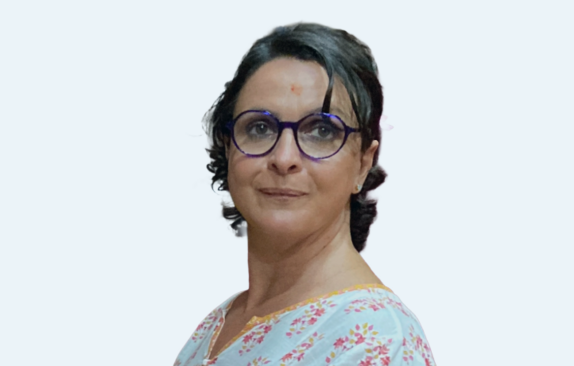 Constantini
 -
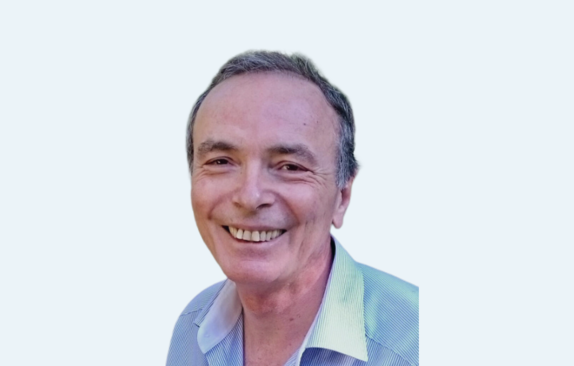
Eliahu Franco
E: eli.franco@univie.ac.at
T: +43-1-4277-43559
 Franco
 -
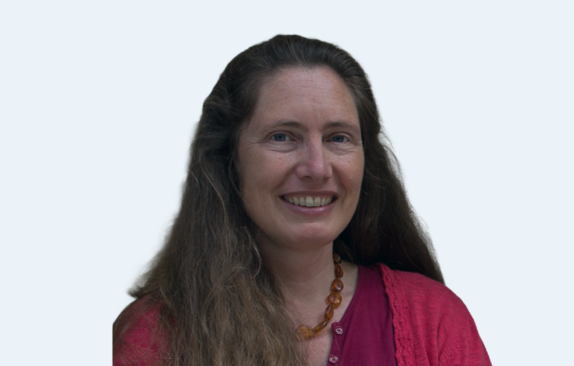
Barbara Gerke
E: barbara.gerke@univie.ac.at
 Gerke
Gerke -
Prema Simon Goet
E: prema.simon.goet@univie.ac.at
T: +43-1-4277-43573
 Goet
Goet -
Hiroko Matsuoka
E: hiroko.matsuoka@univie.ac.at
T: +43-1-4277-43564
-
Kanika Pruthi
E: kanika.pruthi@univie.ac.at
T: +43-1-4277-43574
 Pruthi
 -
Lea Stiller
E: lea.stiller@univie.ac.at
T: +43-1-4277-43571
 Stiller
 -
Helmut Tauscher
E: helmut.tauscher@univie.ac.at
T: +43-1-4277-43554
-
Tawni Tidwell
E: tawni.lynn.tidwell@univie.ac.at
T: +43-1-4277-43567
 Tawni Tidwell
Organisationsassistentinnen
Spitalgasse 2
1090
Wien
Raum: 2B-O1-52
E-Mail
E-Mail in Zwischenablage kopieren
+43-1-4277-43501
Spitalgasse 2
1090
Wien
Raum: 2C-O1-06
E-Mail
E-Mail in Zwischenablage kopieren
+43-1-4277-43502
Spitalgasse 2
1090
Wien
Raum: 2A-O1-14
E-Mail
E-Mail in Zwischenablage kopieren
+43-1-4277-43551
Lehrbeauftragte


Kellner, Birgit


Professor*innen i.R.
- Univ.-Prof. i.R. Dr. Martin Gaenszle (E: martin.gaenszle(at)univie.ac.at)
- Univ.-Prof. i.R. Dr. Klaus-Dieter Mathes (E: klaus-dieter.mathes(at)univie.ac.at)
- O. Univ.-Prof. i.R. Dr. Karin C. Preisendanz (E: karin.preisendanz(at)univie.ac.at)
- Emer. O. Univ.-Prof. Dr. Ernst Steinkellner (E: ernst.steinkellner(at)oeaw.ac.at)
Affiliierte Wissenschaftler*innen
- Dr. Alessandro Graheli
- Prof. Dr. Birgit Kellner
- Dr. Magdalena Kraler
- Dr. (habil.) Marion Rastelli
- Dr. (habil.) Walter Slaje
- Dr. Himal Trikha
In Memoriam

Gerhard Oberhammer, emeritierter ordentlicher Professor für Indologie an der Universität Wien und wirkliches Mitglied der Österreichischen Akademie der Wissenschaften, ist am 22. Dezember 2025 nach einem schaffensreichen Leben im Alter von 96 Jahren in seiner Heimatstadt Innsbruck, Österreich, verstorben.
Nachruf von Marion Rastelli, Marcus Schmücker und Himal Trikha (PDF)


Nachruf | von Karin Preisendanz
After a short severe illness, our friend and colleague Chlodwig H. Werba passed away on January 25, 2019, leaving behind his wife Ursula Werba-Berger.
Even before completing his doctoral dissertation (a distinguished “promotio sub auspiciis praesidentis rei publicae”) in Linguistics and Classical Philology on “Die arischen Personennamen und ihre Träger bei den Alexanderhistorikern (Studien zur iranischen Anthroponomastik)” at the University of Vienna in 1982 (unpublished), Werba had been employed as a student assistant at the former Department of Indology of the University and involved in its various editorial projects. From 1983 onwards, he was University Assistant at the same department and started to regularly teach there, competently contributing the (historical)linguistic aspects of Vedic, the Prakrit languages and classical Sanskrit to the teaching program. In 1994, he received tenure, which was followed in 1997 by his habilitation in the field of Indo-Iranian Studies with a thesis published in the same year as “Verba Indoarica: Die primären und sekundären Wurzeln der Sanskrit-Sprache. Pars I: Radices Primariae” by the publishing house of the Austrian Academy of Sciences, Vienna. This monumental monograph (590p.) is Werba’s lasting opus magnum which characterizes him as an extremely meticulous and competent, broadly informed and well organized historical linguist with a seemingly inexhaustible collector’s passion.
Werba published several papers, mainly in Iranian linguistics, his main area of research interest. Among these, the following two should be especially mentioned:
“mavared-ra na-bayad ziyad kard be joz-e ehtiyaj [(Indo-)Iranische Rekonstrukte als textkritisches Korrektiv in der Altiranistik”, in Iranistik in Europa: gestern, heute, morgen. Akten der Fachtagung in Graz, 12.–15.02.2003, ed. H. Eichner et al., Wien: Verlag der Österreichischen Akademie der Wissenschaften 2006, pp. 261–306.
“Das Epitheton achaimenidischer Macht und Größe: Medisches Erbe oder altpersische Neubildung”, in Ranj-o Ganj: Arjnāme-ye Dr. Zohre Zaršenās. Papers in Honour of Prof. Z. Zarshenas Part II, Teheran: Institute of Human Science and Cultural Studies 2013, pp. 119–240.
He was also interested in aspects of the history of Indology, seen, e.g., in “Leopold von Schroeder: Eine annotierte Bibliographie”, co-authored with Arlo Griffiths and published in the Wiener Zeitschrift für die Kunde Südasiens / Vienna Journal of South Asian Studies (WZKS) 50, 2006, pp. 5–25.
Next to collecting material for the first and (almost completed) second part of his “Verba Indoarica”, Werba’s main field of activity was in editing and indexing. Since his days as a student assistant in 1979, he was involved in various ways in the editing of the WZKS and from volume 44 onwards (2001) acted as co-editor. Together with Gerhard Oberhammer, he also edited the second volume of Erich Frauwallner’s posthumous works, entitled “Philosophische Texte des Hinduismus” (Wien: Verlag der Österreichischen Akademie der Wissenschaften 1992). Moreover, Werba was a passionate and highly conscientious academic teacher, both at the Department of South Asian, Tibetan and Buddhist Studies of the University of Vienna and at its Department of Linguistics.
Werba was a member of the founding executive board of the association "De Nobili Research Library – Association for Indology and the Study of Religion" in the function of deputy secretary from 1989 until 2000.
The Department of South Asian, Tibetan and Buddhist Studies of the University of Vienna and the association have lost an always engaged, highly knowledgeable and sometimes enjoyably disputatious colleague. He will be deeply missed by colleagues and students alike.

Nachruf | von Himal Trikha und Karin Preisendanz
Roque Mesquita passed away peacefully on September 22, 2016 after a protracted illness. He leaves behind his wife Erika, their children Sushila, Dominik and Sunanda, and a granddaughter, Marcia.
Born and educated in Goa, Mesquita deepened his theological education at the Gregorian University, Rome, before taking up the study of Indology at the University of Vienna’s Department of Indology with Gerhard Oberhammer. He initially specialized in the study of Viśiṣṭādvaitavedānta, especially the teachings of Yāmunamuni. In 1971, he completed his doctoral dissertation on the problem of the cognition of God in Yāmunamuni’s writings, which was followed by a critical edition and annotated translation of Yāmunamuni’s Saṃvitsiddhi, including a reconstruction of the lost parts of this work, published in 1988. The Saṃvitsiddhi remained at the center of Mesquita’s research interests and was also the topic of his habilitation thesis on Yāmunamuni’s philosophy of cognition submitted in 1987 and published in revised and enlarged form in 1990. From the mid-nineties onwards, he turned to Dvaitavedānta and studied Madhva’s work. He wrote several books on Madhva which were published in the monograph series of the De Nobili Research Library:
Madhva und seine unbekannten literarischen Quellen. Einige Beobachtungen. [PDNRL No. 24]. Vienna 1997, 151p. (also translated into English)
Madhva, Viṣṇutattvanirṇaya. Annotierte Übersetzung mit Studie. [PDNRL No. 28]. Vienna 2000, Hardcover, 562p. (partly translated in revised form into English, see below)
Madhvas Zitate aus den Purāṇas und dem Mahābhārata. Eine analytische Zusammenstellung nicht identifizierbarer Quellenzitate in Madhvas Werken nebst Übersetzung und Anmerkungen. [PDNRL No. 34]. Vienna 2007, Hardcover, 643p. (also translated into English)
His final book, a partial revised translation of "Madhva, Viṣṇutattvanirṇaya. Annotierte Übersetzung mit Studie," was seen through the press by his family and published as "Studies on Madhva’s Viṣṇutattvanirṇaya," New Delhi: Aditya Prakashan 2016, 308p.
Mesquita engaged in lively discussions on his research as long as his health permitted. His last article, "Rejoinder II: Madhva's Unknown Literary Sources," appeared in 2014 in Rivista di Studi Orientali 87.
From 1972 until his retirement in 2002, Mesquita was a faculty member at the Department of Indology, from 2000 onwards Department of South Asian, Tibetan and Buddhist Studies. He was a member of the founding executive board of the association "De Nobili Research Library – Association for Indology and the Study of Religion" in the function of deputy chairperson from 1989 until 2004, and was co-editor of “Hermeneutics of Encounter. Essays in Honour of Gerhard Oberhammer on the Occasion of his 65th Birthday” (Publications of the De Nobili Research Library 20).
The Department of South Asian, Tibetan and Buddhist Studies of the University of Vienna and the association have lost a dear and gentle colleague. His friendly and good-spirited nature will be very much missed.

Nachruf | von Vincent Eltschinger
Our excellent friend and colleague Helmut Krasser (born April 27, 1956) passed away during the night of Saturday to Sunday (March 29-30, 2014) at the Saint-Elizabeth Hospital in Vienna surrounded by his daughter Sarah, his ex-wife Sabine, and his beloved mother. A leading scholar in the field of Buddhist philosophy and epistemology, Helmut Krasser has been the director of the Institute for the Cultural and Intellectual History of Asia (Austrian Academy of Sciences, Vienna) since 2007, an institute in which he had been active since 1987. Our friend died after a two-year struggle against illness during which he exemplarily never gave up hope and never ceased to care for optimism and good mood.
Helmut Krasser had studied Indian Buddhism, Tibetology and philosophy at the University of Vienna from 1981 to 1989 under the guidance of his teacher Prof. Ernst Steinkellner, to whom he succeeded at the head of the Vienna institute. After his PhD (an edition and German translation of Dharmottara’s Laghuprāmāṇyaparīkṣā, Vienna 1991), he spent two years in Kyoto under the learned and friendly supervision of Prof. Katsumi Mimaki.
Back in Vienna, he developed further the philological and historical acumen that made his work such an irreplaceable standard in the field of late Indian Buddhist philosophy.
During the last ten years, Krasser had been increasingly involved in the Vienna institute’s groundbreaking cooperation with the China Tibetology Research Center (Beijing), a cooperation that has resulted in the sensational publication of numerous works the Sanskrit original of which had been hitherto considered lost. Besides his participation in numerous collective works and a long list of articles (e.g., Pramāṇakīrtiḥ, Festschrift Steinkellner, Vienna 2007, together with Birgit Kellner, Horst Lasic, Michael Torsten Much, Helmut Tauscher; Religion and Logic in Buddhist Philosophical Analysis, Vienna 2011, together with Horst Lasic, Eli Franco and Birgit Kellner; Scriptural Authority, Reason and Action, Vienna 2013, together with Vincent Eltschinger), Krasser’s most significant works include the monumental edition, translation and study of Śaṅkaranandana’s Īśvarāpākaraṇasaṅkṣepa (Vienna 2002, Krasser’s habilitation thesis), the edition of the first two chapters of Jinendrabuddhi’s Viśālāmalavatī commentary on Dignāga’s Pramāṇasamuccaya (Vienna, 2005 and 2012, together with Horst Lasic and Ernst Steinkellner), and an annotated translation of the final section of Dharmakīrti’s Pramāṇavārttikasvavṛtti (Vienna 2012, together with Vincent Eltschinger and John Taber).
In his activity as a lecturer at the University of Vienna, Krasser has been supervising the PhD theses of several promising young scholars, among whom mention may be made of Masamichi Sakai, Hisataka Ishida, and Patrick Mc Allister.
Let it also be mentioned that in the last few years, Krasser’s research work led him to hypothesize that most of the extant Buddhist philosophical literature actually consisted in more or less carefully edited notes taken by monastic students during “philosophy” classes. The (hypo)thesis, which certainly needs further substantiation and an edition of Krasser’s research notes, will not fail to be the source of scholarly debate and inspiration.
All those who have had the privilege to meet Helmut Krasser have been instantly charmed by his wit, the warm and vibrant expression of his eyes, his exceptional understanding of things human and social, and the unique manner in which he managed not to take himself or his research (too) seriously. Krasser did not only belong to the most talented scholars of his generation. He also — and maybe above all — belonged to the most generous, humorous and lucid representatives of our field(s). We all owe you, we all miss you, Helmut.