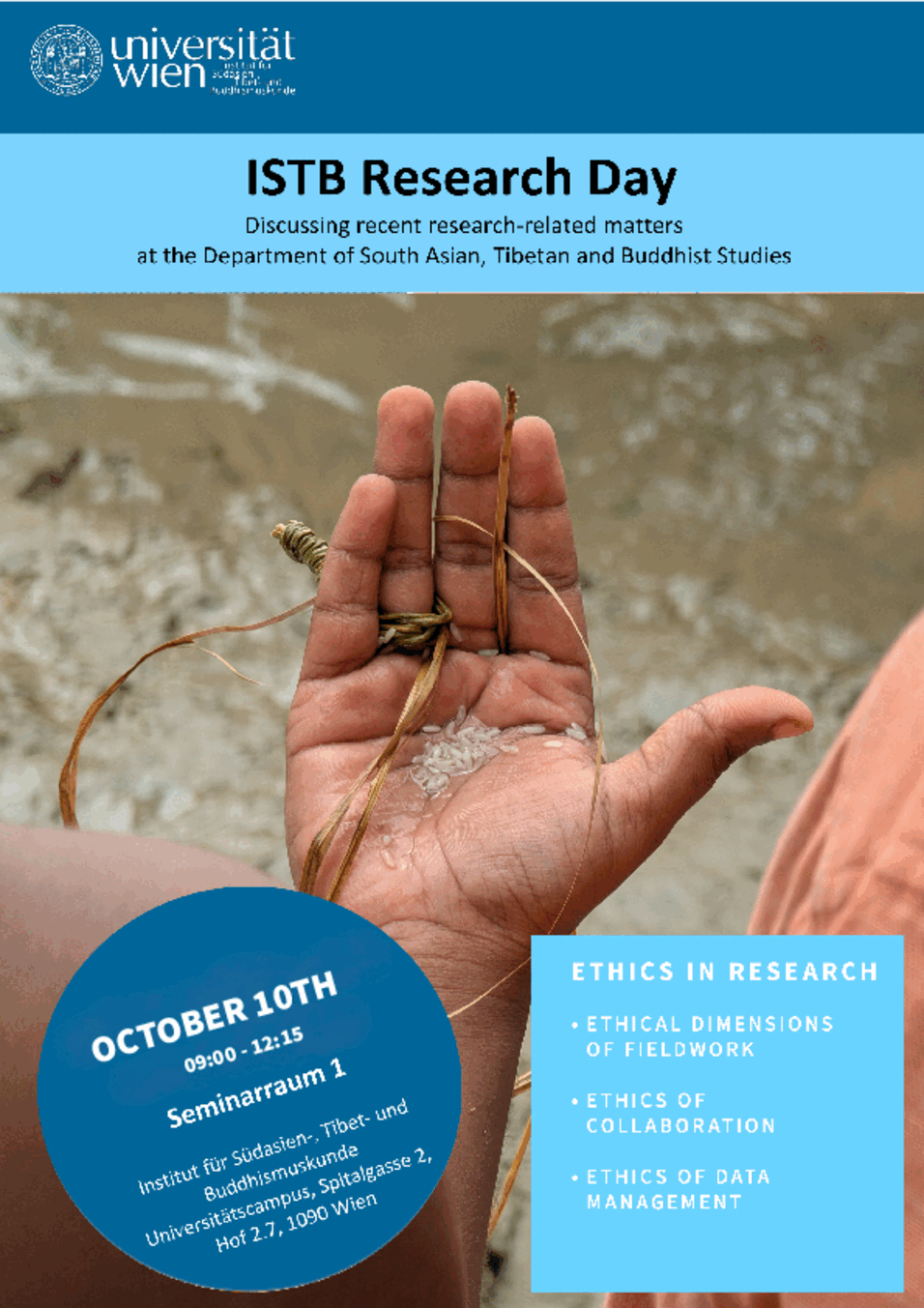
Program Schedule
09:00 – Opening Remarks
09:10 – Borayin Larios (University of Vienna)
Ethics in Practice: Fieldwork in the MANTRAMS Project
This presentation reflects on the ethical dimensions of fieldwork in the ERC-funded MANTRAMS project, which explores the material and multisensory lives of mantras across South Asia. Encounters with bazaar vendors, temple priests, performers, devotees, and digital communities raise questions that extend beyond formal protocols and consent forms. I will discuss how reciprocity, anonymity, representation, and benefit-sharing emerge as everyday concerns, often requiring negotiation and adaptation. Rather than treating ethics as compliance with institutional guidelines, I approach it as a practice shaped in dialogue with collaborators. These reflections highlight the tension between universal research ethics frameworks and the situated realities of ethnographic work, and consider what it means to practice ethics in the study of contemporary South Asian religions.
09:50 – Barbara Gerke (University of Vienna)
Ethical Considerations while Collaborating with Himalayan Colleagues in the Pandemic Narratives
This presentation reflects on the ethics of collaboration at the intersections of fieldwork, mentorship, and co-authorship in the FWF-funded Pandemic Narratives project. During the project, my fieldwork and writing have had a strong focus on collaborating and co-authoring with junior scholars in Himalayan regions of India (Ladakh and Himachal Pradesh) and Bhutan. In this presentation, I will discuss some of the pertinent ethical issues and challenges. Insights touch upon themes of tutoring, co-presenting, co-authorship, reciprocity, and intellectual exchange, and raise questions about what kinds of ethical issues are entailed in such varying forms of collaborations.
10:30 – Coffee Break
11:00 – Edda Schwarzkopf (University of Tübingen)
FAIR and CARE Principles as Ethical Guidelines in Research Data Management.
While research ethics are first and foremost negotiated and done in situated practice and collaboration through relationships with (co-)producers of data and knowledge(s), the data life cycle involves steps after data creation that warrant further ethical considerations. Here, the widely adopted frameworks of the FAIR Principles from the Open Science domain (data should be Findable, Accessible, Interoperable and Reusable) and the complementary CARE Principles for Indigenous Data Governance (data should comply with the four pillars Collective Benefit, Authority to Control, Ethics and Responsibility) serve as tools for quality assurance in ethical conduct to funding agencies and scientific communities alike. This presentation will introduce both frameworks and argue for their general purpose before turning to the practical implementations and design choices faced by researchers, research participants and data managers. From my perspective as the data manager of MANTRAMS, I will show the strategies we adopted to comply with ERC funding requirements and ethical demands faced by interdisciplinary historical and ethnographic research on religious practices in Global Southern Asia, before utilizing these situated practices for critique and deconstruction of a hegemonic universal "Be FAIR and CARE" agenda.
12:00 – Final Discussion (Moderation: Nina Mirnig & Markus Viehbeck)